Saffron
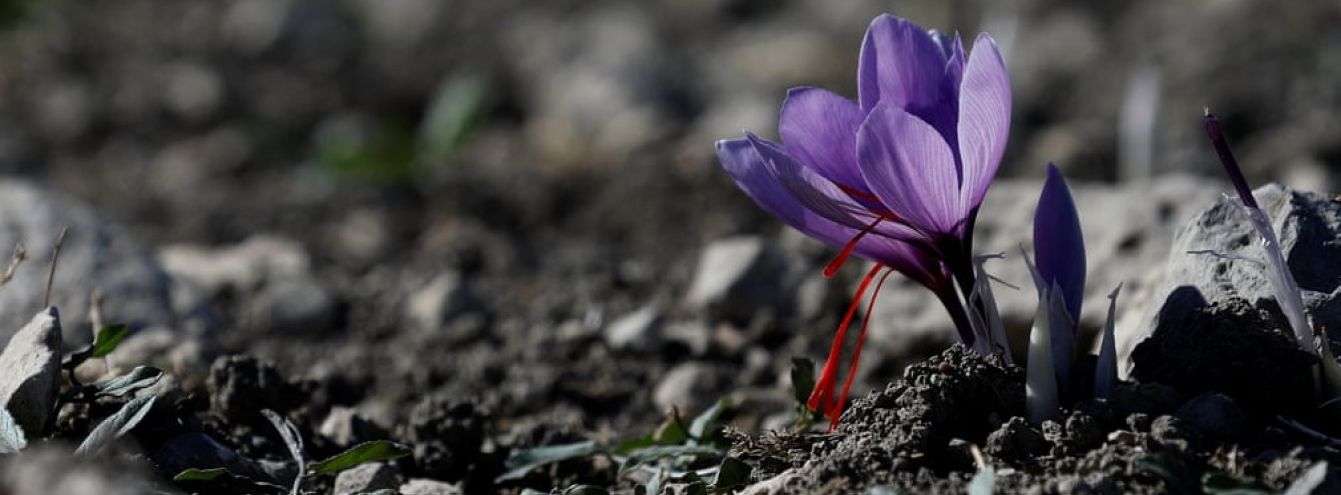
Saffron
"The Miracle Of The Nature, Red Gold, The Masterpiece"
The Saffron, (Crocus sativus) comes from (Iridaceae) family; this beautiful flower is in the spice root in your kitchen. It is one of the 85 members of the genus Crocus, Saffron is native of Asian Minor, and it is cultivated in Mediterean Countries too! The miracle flower has predominantly contains certain chemical constituents that are responsible for imparting color, flavor, and aroma. Some of its components have cytotoxic, anti-carcinogenic and anti-tumor properties.
The growing area for saffron is not extensive, although its demand in the international market is increasing. Research activities have been initiated to develop new production technologies of this spice in many countries. Saffron grows best in friable, loose, low-density, well-watered, and well-drained clay calcareous soils. Besides, climate and soil, planting time, seed/corm rate, planting depth, corm size/weight, crop density, nutrient management, weed management, growth regulators, harvest, and post-harvest management also influence saffron quality and quantity.It is estimated that for one kg of saffron, about 150-170 thousand flowers are required. In many medical references, saffron has been known as “the Great Plant” and has even been called “the Sacred Plant” because of the compounds found in saffron, Safranol, Crocin, Crocetin and Picrocrocin. Saffron is used not only as an aromatic spice for food but also for medicinal purposes.
The mostly it has been planted in moderate climate; Saffron is a perennial herb that can be used for about 7-5 years.
....
In the next part, we will explain more in details.
2019-07-25 10:00:00

 Instagram
 Pinterest
 X
X YouTube


