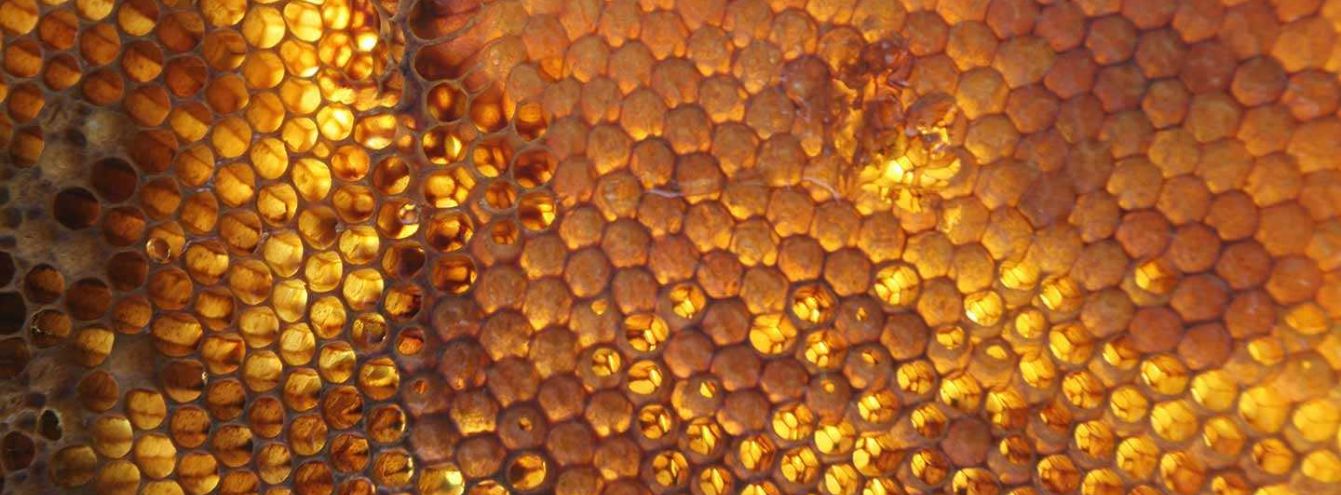
An Old food full of nutrition facts, a strong superfood, a medicine food, the food can serve as one of the sources for breakfast, mid-day meal, main course, evening meal, dessert, natural source for sweets and cakes. Honey is full of nutrition and vitamin source for all ages 2 to 120 years and more. Honey is a sweet, viscous food substance made by honeybees and some related insects. Bees produce honey from the sugary secretions of floral nectar, enzymatic activity and water evaporation. Bees store honey in wax structures called honeycombs. The variety of honey produced by honeybees is the best known, due to its worldwide commercial production and human consumption. Honey collected from wild bee colonies, or from hives of domesticated bees, a practice known as beekeeping or apiculture.
Honey is the first and most reliable source of sweetener for early humans. The oldest recorded record of honey dates back to 5500 BC and dates back to the Egyptians. There are also many indications of the use of honey in ancient times. But bees existed long before the written history of man. Modern man evolved 50.000 years ago. Bees probably made honey 40 million years ago. It is the main center of bees in Southeast Asia. About 30 million years ago, bees appeared to have a social behavior and were structurally almost identical to modern bees. (Apis mellifera) known as the western bee, is the most common domestic species. It probably originated in tropical Africa and from there spread to northern Europe and eastern Asia. Native Americans did not know honey. In 1622, the first European travelers brought a species of Western bee to the Americas. In fact, the bees did not cross the Rocky Mountains. They were shipped to California in the early 1850s. Today bees are everywhere and honey is produced in most countries except North and South Pole.
Today, Consumers have become aware that the industrial methods of honey production have greatly affected their environment and products quality. They want a reorientation of these production modes to obtain healthy and natural organic products.
Organic honey is produced from the pollen of organically grown plants, and without chemical miticides to treat the bees. Buying organic honey ensures that you avoid contact with pesticides that may be sprayed on or near the plants visited by honeybees. Of course, bees usually fly up to 3 Kilometers from the hive looking for flowers, which means that all the flowers within this 3 Kilometers radius must be certified organic in order for the honey to truly be organic. As you would expect this can be difficult to control, but an Organic certification is a good way you can be sure the apiary is taking care to ensure it. It’s also important to remember that honey labeled “organic” is not necessarily raw or minimally processed unless labeled as such.
China, the United States, Iran and Turkey are the top four honey producers in the world. Geographical conditions, type of flowers, how bees are raised and cared for, bee breed and many other factors affect the production of the best and highest quality honey. China is the largest producer and exporter of organic honey in the world, followed by Argentina, but both countries have low per capita honey consumption, about 1 kg per year. Germany is the world's largest importer of honey. Imports 3 times the production of organic honey, however, part of this honey is re-exported after processing. The largest importers of honey are Japan and the United States.
Finally, the unique benefits of organic honey cannot be ignored, referring to the healing properties of honey. Examining the articles in this field, it was found that honey and its by-products such as propolis and compounds in bee stings exert their antioxidant and anti-inflammatory effects through various mechanisms and have anti-cancer properties. Looking at the very wide properties of honey, it can be seen that the Qur'an's emphasis on its healing is not unreasonable, and today in medical science, many researches in the field of treatment of various diseases, including cancer, using honey and related by-products. It has created new horizons in cancer treatment.
Organic honey is a substance that improves blood cholesterol levels and lowers triglycerides. This nutrient promotes heart health with its positive effects on blood pressure, cholesterol and triglycerides. Organic honey also helps improve sleep quality by helping to produce melatonin. It has antifungal and antibacterial properties that make it a good remedy for skin problems such as eczema, dandruff and acne. Organic honey helps control weight because it is an excellent substitute for sugar. Also propolis can help treat Alzheimer's due to the properties of its internal compounds. Of course, the effects of propolis have a greater preventive role than Alzheimer's; But research has shown that some propolis of a certain plant origin is also effective in treating Alzheimer's. It reduces oxidative stress in the brain and increases brain growth factors.
USDA certified organic foods are grown and processed according to federal guidelines addressing, among many factors, soil quality, animal raising practices, pest and weed control, and use of additives. Organic producers rely on natural substances and physical, mechanical, or biologically based farming methods to the fullest extent possible. Put simply, if you see the “USDA Organic” or “Certified Organic” seal on your food, the item must have an ingredients list and the contents should be 95 percent or more certified organic (not counting salt and water), meaning free of synthetic additives like pesticides, chemical fertilizers and dyes, and must not be processed using industrial solvents, irradiation or genetic engineering, according to the USDA. The remaining 5 percent may only be foods or processed with additives on an approved list.
Web source and references:
 Instagram
 Pinterest
 X
X YouTube